
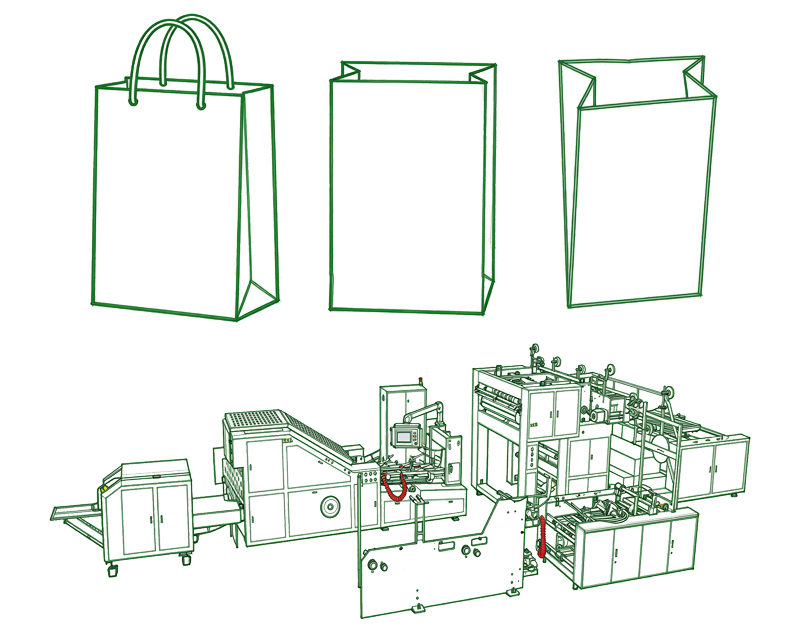
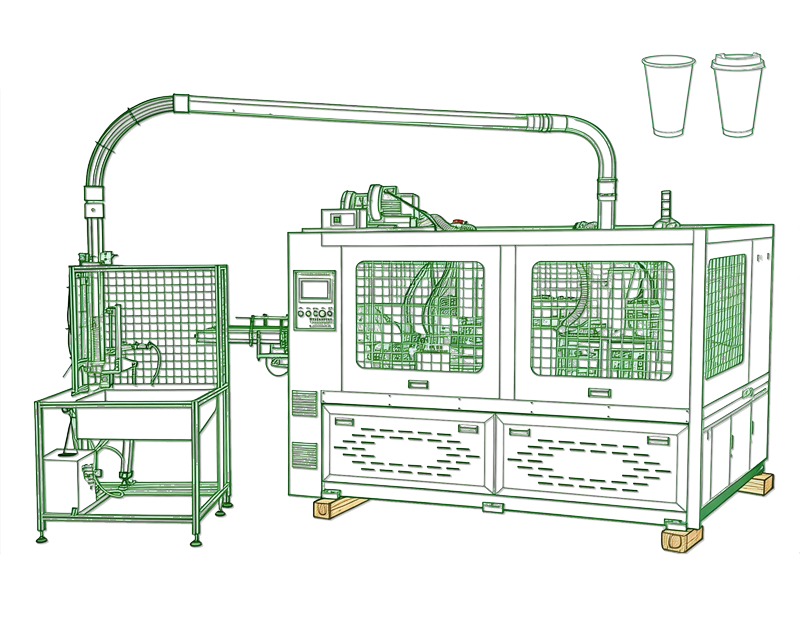
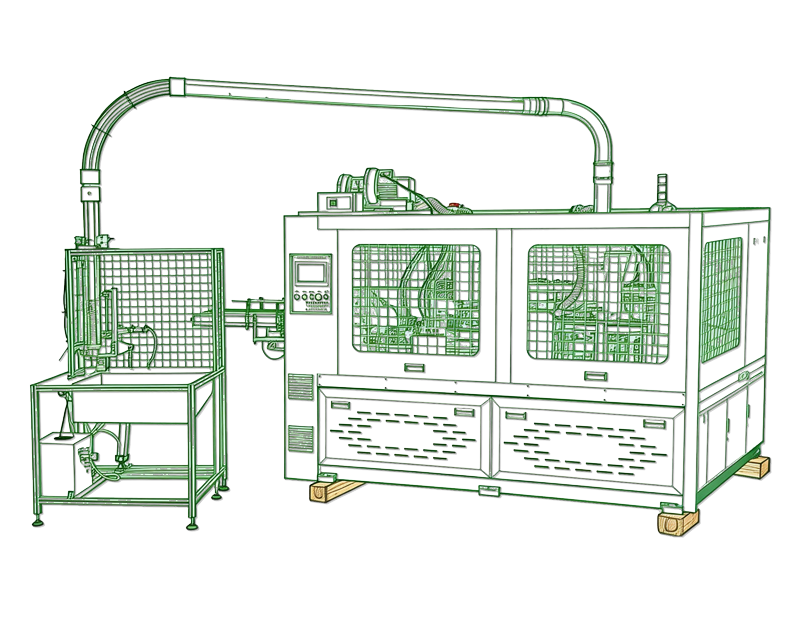

A square bottom paper bag machine is one of the most versatile investments a packaging business can make. It produces the classic SOS (Self-Opening Sack) bags used in grocery stores, bakeries, retail shops, and food delivery worldwide. Square bottom bags open fully and stand upright, which makes them the default choice wherever presentation, fast filling, and branding matter. But choosing the right machine requires more than comparing prices. You need to match the machine to your bag size, paper material, daily output target, and factory conditions.
In this guide, we explain the six key factors every buyer should evaluate before requesting a quote. We also include a practical example based on the LINZ PACK LZ-FD350 to show how real specifications translate into production decisions.
1. Start With Your Paper Bag Size
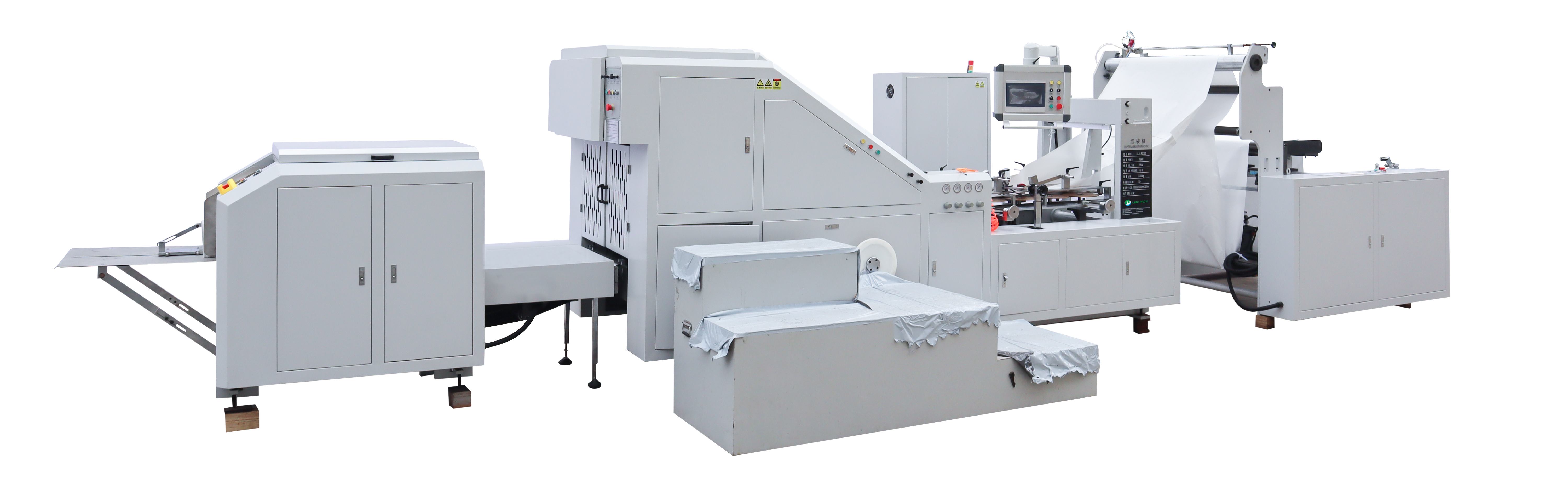
Before you look at speed or automation, define the bag you want to produce. Square bottom paper bag machines are built around fixed width and gusset ranges, and selecting a machine that is too narrow or too wide for your product will limit your business.
The main dimensions to confirm are:
- Bag width – the flat width of the bag body
- Cutting length – the height of the finished bag
- Bottom width – the depth of the square bottom fold
For example, the LINZ PACK LZ-FD350 handles bag widths from 150 mm to 330 mm, cutting lengths from 270 mm to 530 mm, and bottom widths from 50 mm to 105 mm. This range covers standard grocery bags, bread bags, and medium-size snack packaging. If you need wider bags for retail or industrial use, the same LZ-FD series includes the LZ-FD450 configuration, which extends the bag width up to 430 mm.
Practical tip:Always choose a machine whose maximum width is at least 15–20 % larger than your current largest bag. This leaves room for product-line expansion without buying a second machine.
2. Check the Paper GSM and Material
Not every square bottom paper bag machine handles the same paper weight. GSM (grams per square meter) directly affects feeding stability, glue adhesion, and final bag strength.
Many automatic and semi-automatic square bottom machines support a range such as 60–150 g/m²; the LZ-FD350 extends this to 60–180 g/m². Within this range:
- 60–80 g/m² – Lightweight kraft, often used for dry-food and bakery bags
- 80–120 g/m² – Standard grocery and retail bags
- 120–180 g/m² – Heavy-duty or laminated bags for frozen food and premium retail
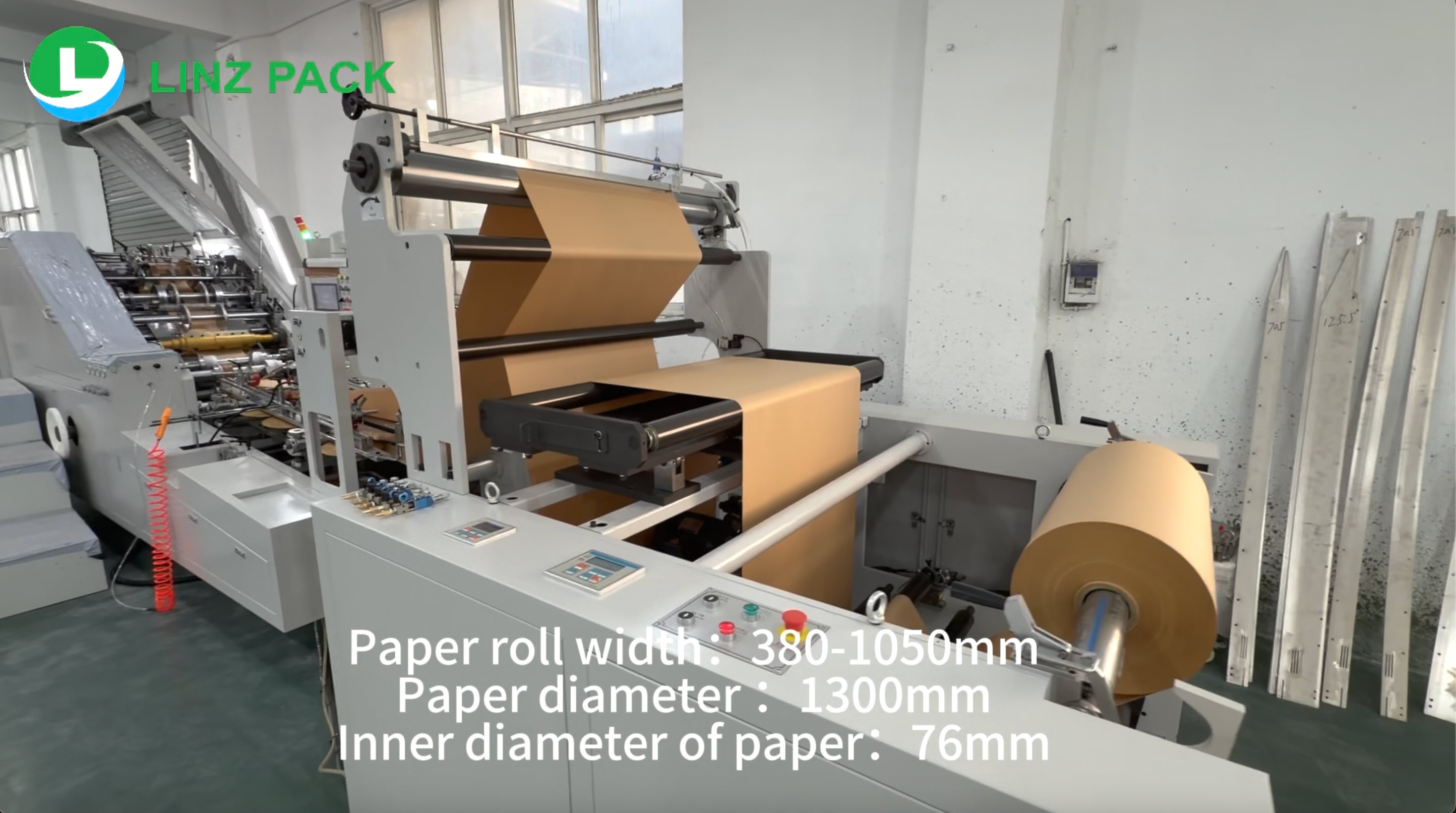
The LZ-FD350 operates reliably across 60–180 g/m². A Mitsubishi motion controller with servo web guiding and automatic tension control keeps feeding stable across the full GSM range, and the machine accepts blank or pre-printed paper rolls. If you plan to run coated or printed paper, confirm that the machine supports inline printing or at least pre-printed roll feeding.
Whichever GSM you choose, it is worth confirming responsible paper sourcing before you commit: many European and North American retailers now ask for FSC-certified kraft in their branded paper bags, so verify with your paper supplier early rather than discovering a material limitation after the machine is installed.
3. Consider Your Required Production Capacity
Machine brochures often advertise maximum mechanical speed. In practice, continuous production runs 10–20 % below that peak because of roll changes, glue warm-up, and minor adjustments.
When evaluating capacity, ask two questions:
1. What is themaximum mechanical speed (bags per minute)?
2. What is the realistic continuous output during an 8-hour shift?
The LZ-FD350 lists a maximum mechanical speed of 220 bags per minute and a rated working speed of up to 180 bags per minute. In stable production with trained operators, buyers typically achieve 150–170 bags per minute consistently. Over an 8-hour shift, that equals roughly 65,000–75,000 bags, depending on material changeover frequency. As a quick benchmark, a machine holding 160 bags per minute for 7.5 productive hours produces about 72,000 bags per shift—enough to judge whether one machine covers your current order book or whether two shifts make more sense than a second machine.
Important:Faster is not always better. If your daily requirement is only 20,000 bags, a 260-bags-per-minute machine may waste capital and floor space. Match speed to volume.
4. Check Automation and Machine Configuration
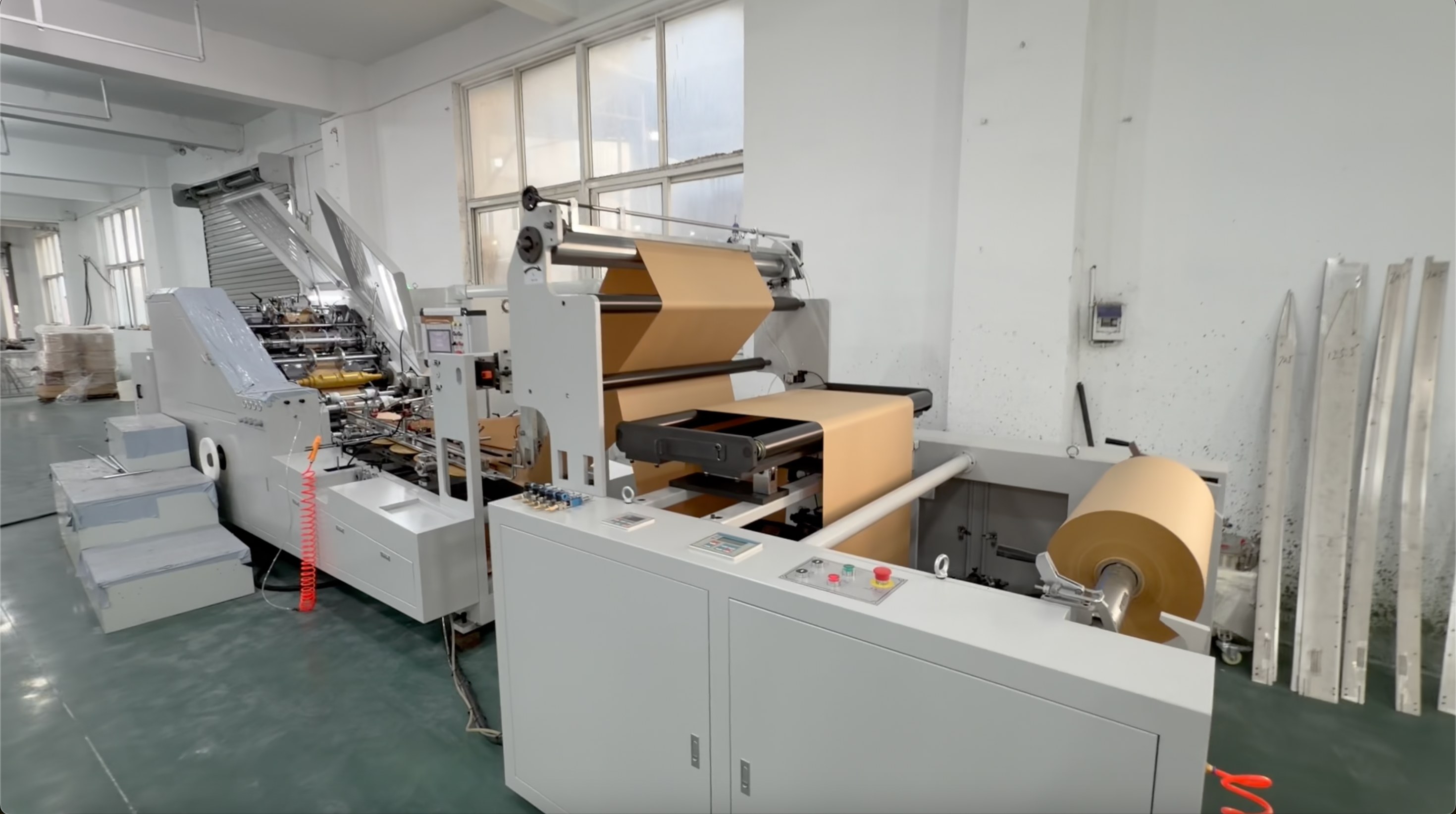
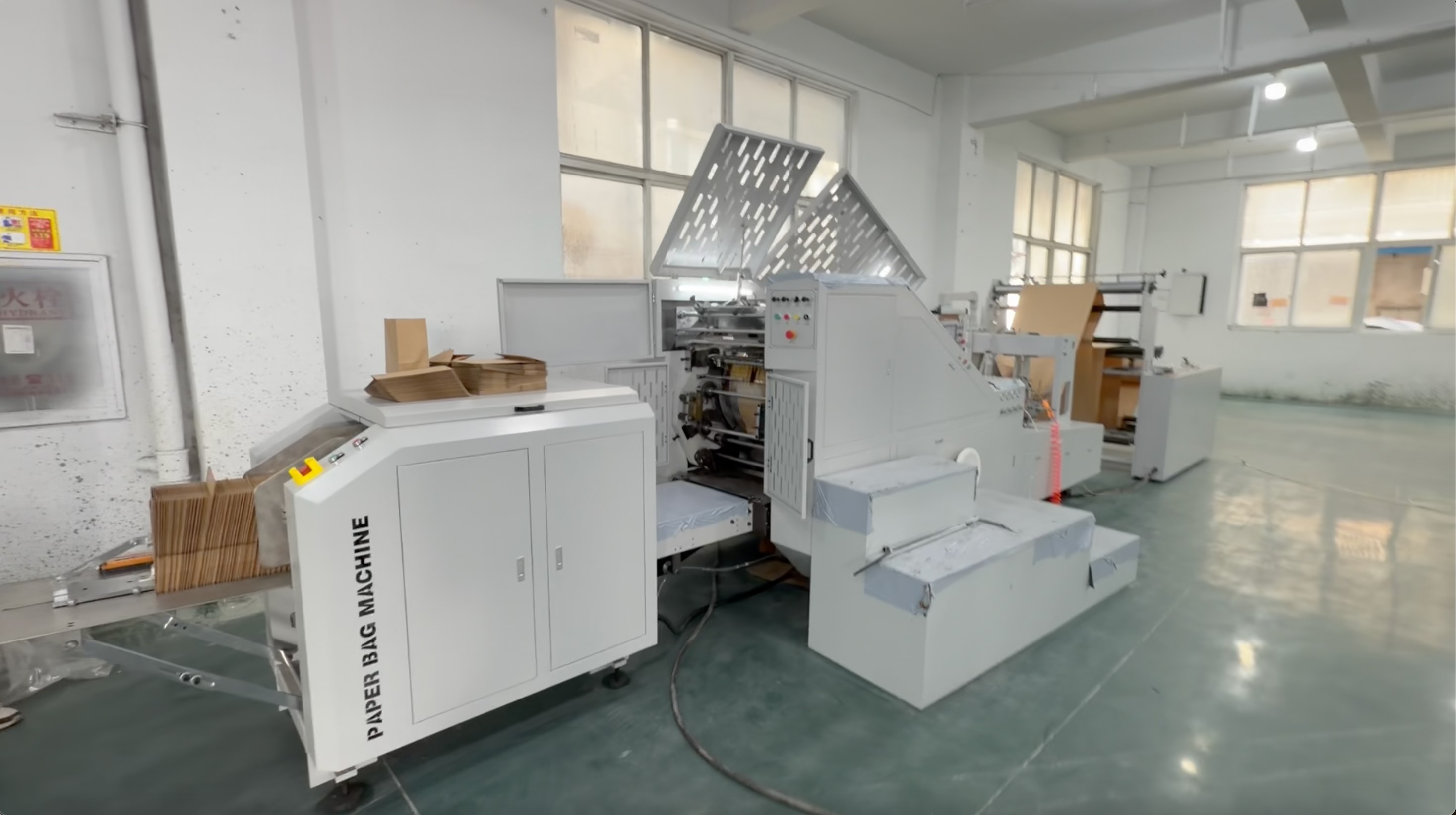
Modern square bottom paper bag machines perform centre gluing, tube forming, cutting, bottom creasing, folding, gluing, and bag collection in one automatic cycle. However, automation levels vary:
- Fully automatic – roll-fed, inline forming and collection, minimal operator intervention
- Semi-automatic – the forming sequence is automatic, but roll loading, splicing, and some handling steps involve the operator
For export buyers, the right level depends on your labour cost and target volume. The LZ-FD350 is a semi-automatic, rolling-feed machine: it runs from blank or pre-printed paper rolls and completes centre gluing, tube forming, cutting, bottom indentation, folding, gluing, bag forming and collection in one synchronised cycle. A Mitsubishi motion controller with servo drives and a Willon touch-screen HMI keep settings repeatable, with international-brand components (ABB, Schneider, SICK, Airtac) throughout for reliable long-run performance.
If your product line includes special features—such as die-cut windows, patch reinforcement, or twisted handles—those typically require dedicated modules or a different machine configuration. Tell the manufacturer exactly which bag features you plan to produce so they can recommend the right automation level from the start.
5. Consider Factory Space and Machine Layout
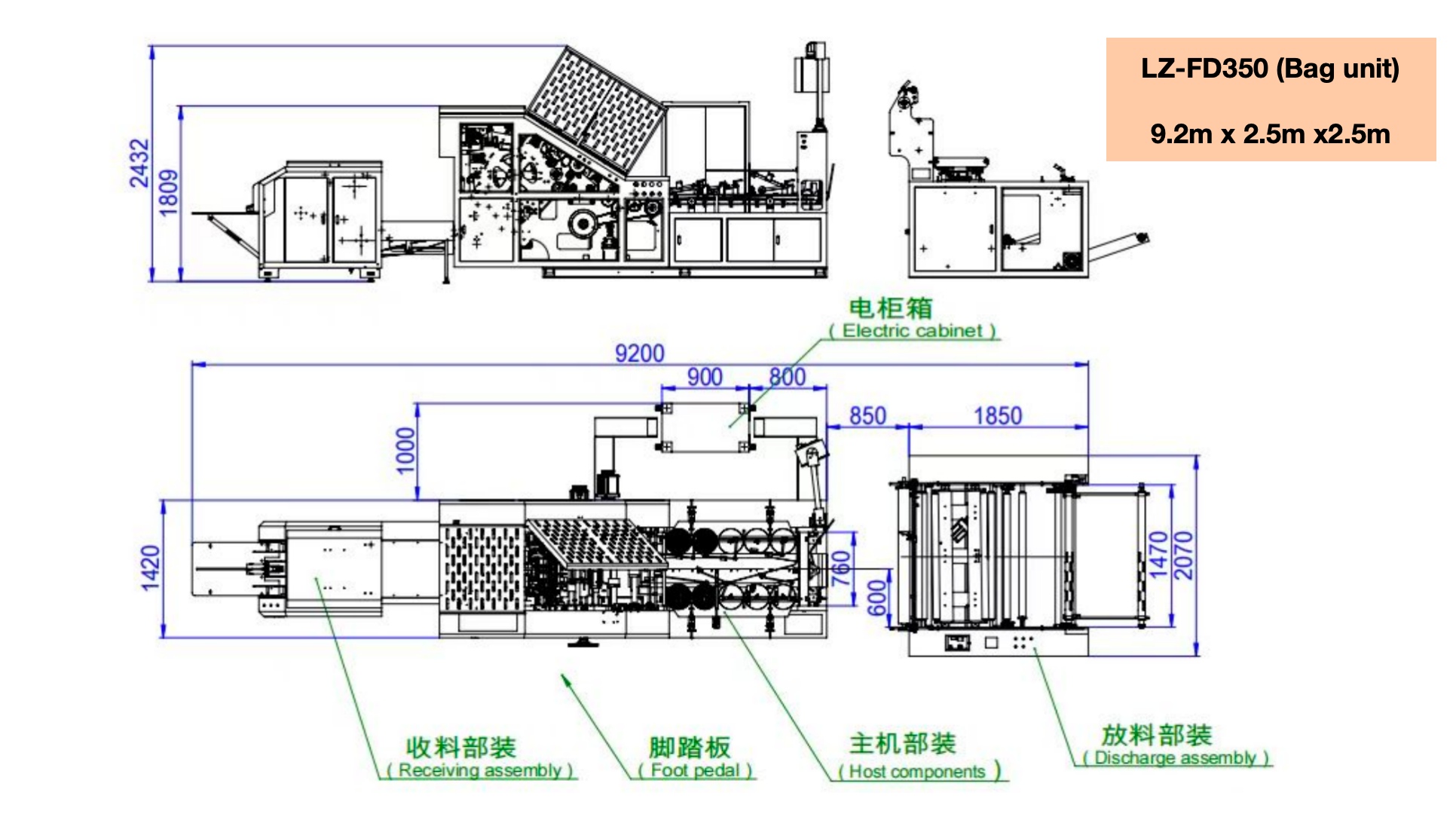
B2B buyers frequently underestimate the floor space a paper bag machine needs. Beyond the machine footprint, you must leave room for:
- Raw paper roll storage and loading
- Operator access on both sides
- Maintenance clearance
- Finished-bag collection and packing
- Glue and compressed-air utilities
The LZ-FD350 machine dimensions are approximately 10,000 × 3,700 × 2,200 mm (L × W × H). We recommend a minimum operating area of 13 m × 6 m to allow safe movement and material flow. Total machine weight is 8,500 kg, so the floor must support industrial loads without vibration.
If you are planning a new factory or reorganising an existing line, request a factory layout drawing from the manufacturer before ordering. LINZ PACK provides machine layout diagrams and installation guidance for every model.
6. Check Installation and After-Sales Support
Installation and commissioning are critical phases. Even the best machine will underperform if operators are not trained or if utilities are underspecified.
Before purchasing, confirm that the supplier provides:
- Installation instructions and layout diagrams
- Operation training (on-site or video)
- Commissioning support
- Remote technical assistance
- Spare parts availability
LINZ PACK supplies detailed installation manuals, operation videos, and remote diagnostic support for all square bottom paper bag machines. A 12-month warranty covers non-human-damage parts, and spare parts are stocked for fast dispatch.
A Practical Example: Choosing the LZ-FD350
To illustrate how the six factors above work together, here is a real-world specification match based on the LINZ PACK LZ-FD350 (the mid-range model of the LZ-FD220/350/450 semi-automatic series):
| Requirement | LZ-FD350 Specification |
| Machine type | Semi-automatic, rolling-feed square bottom paper bag machine |
| Bag type | Square bottom paper bag |
| Bag width | 150–330 mm |
| Cutting length | 270–530 mm |
| Bottom width | 50–105 mm |
| Paper range | 60–180 g/m² |
| Max. mechanical speed | Up to 220 bags/min |
| Rated working speed | Up to 180 bags/min |
| Power | 15 kW (380V, 3-phase) |
| Machine weight | 8,500 kg |
| Dimensions | 10,000 × 3,700 × 2,200 mm |
This configuration suits grocery, bakery, and snack producers who need medium-width bags at steady daily volumes and prefer a proven, cost-effective machine that operators can master quickly. If your project requires smaller or larger bags, the same series offers the LZ-FD220 (bag width 80–220 mm) and the LZ-FD450 (bag width 220–430 mm), which can be evaluated using the same six-factor framework.
What Should You Prepare Before Requesting a Quote?
To receive an accurate recommendation and quotation, prepare the following details before contacting the manufacturer:
1. Target bag width, length, and bottom width
2. Paper type and GSM range
3. Daily or monthly production target
4. Printing requirements (none, pre-printed, or inline)
5. Handle requirements (none, twisted, or flat)
6. Factory dimensions and power supply
7. Delivery destination and shipping terms
Providing these details allows the supplier to propose a square bottom paper bag machine configuration that matches your actual production needs—rather than selling you oversized or undersized equipment.
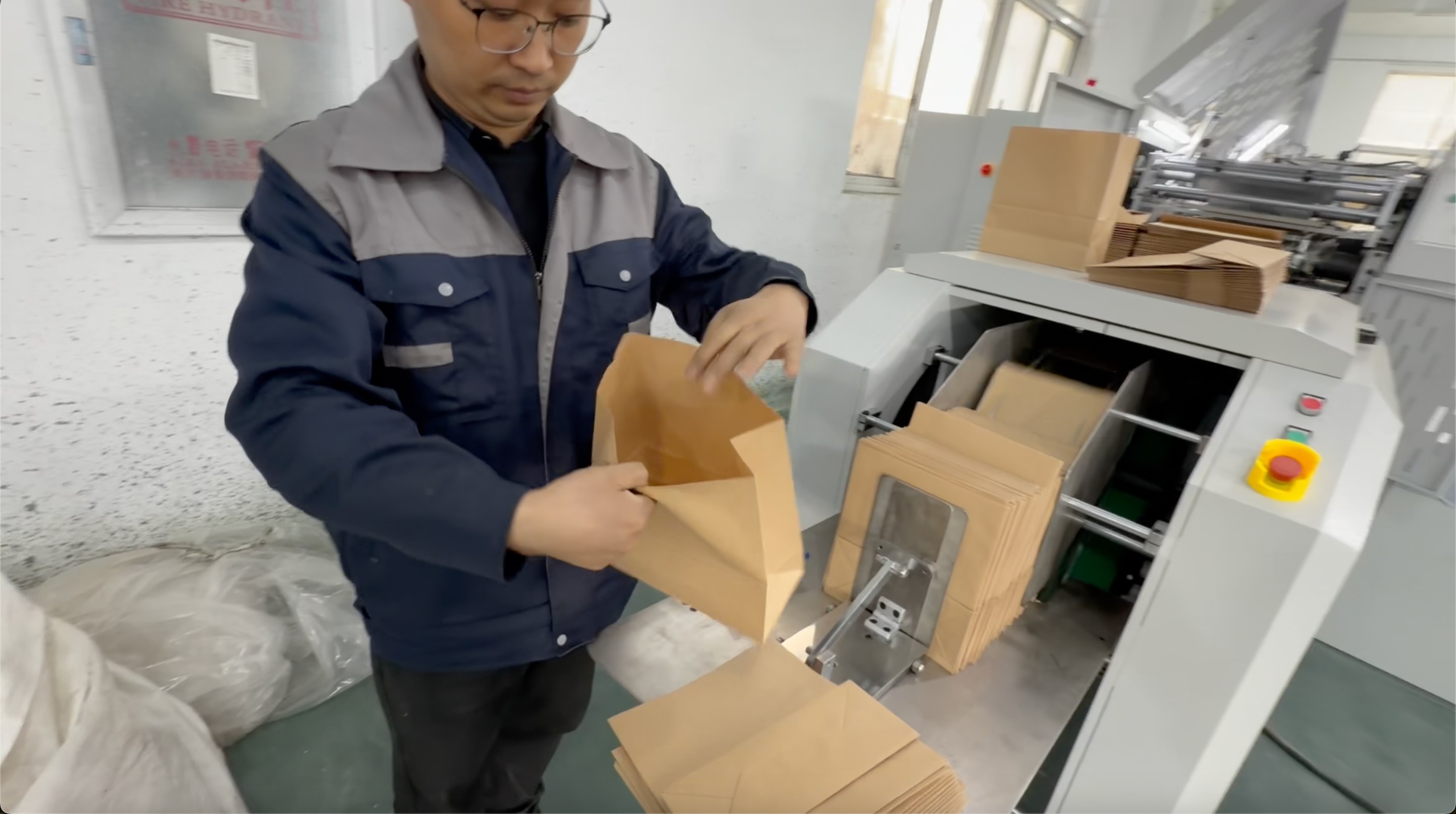
Need help choosing the right square bottom paper bag machine? Contact LINZ PACK with your bag size, paper specification, and production target. Our team will recommend the most suitable configuration and provide factory pricing within 12 hours.